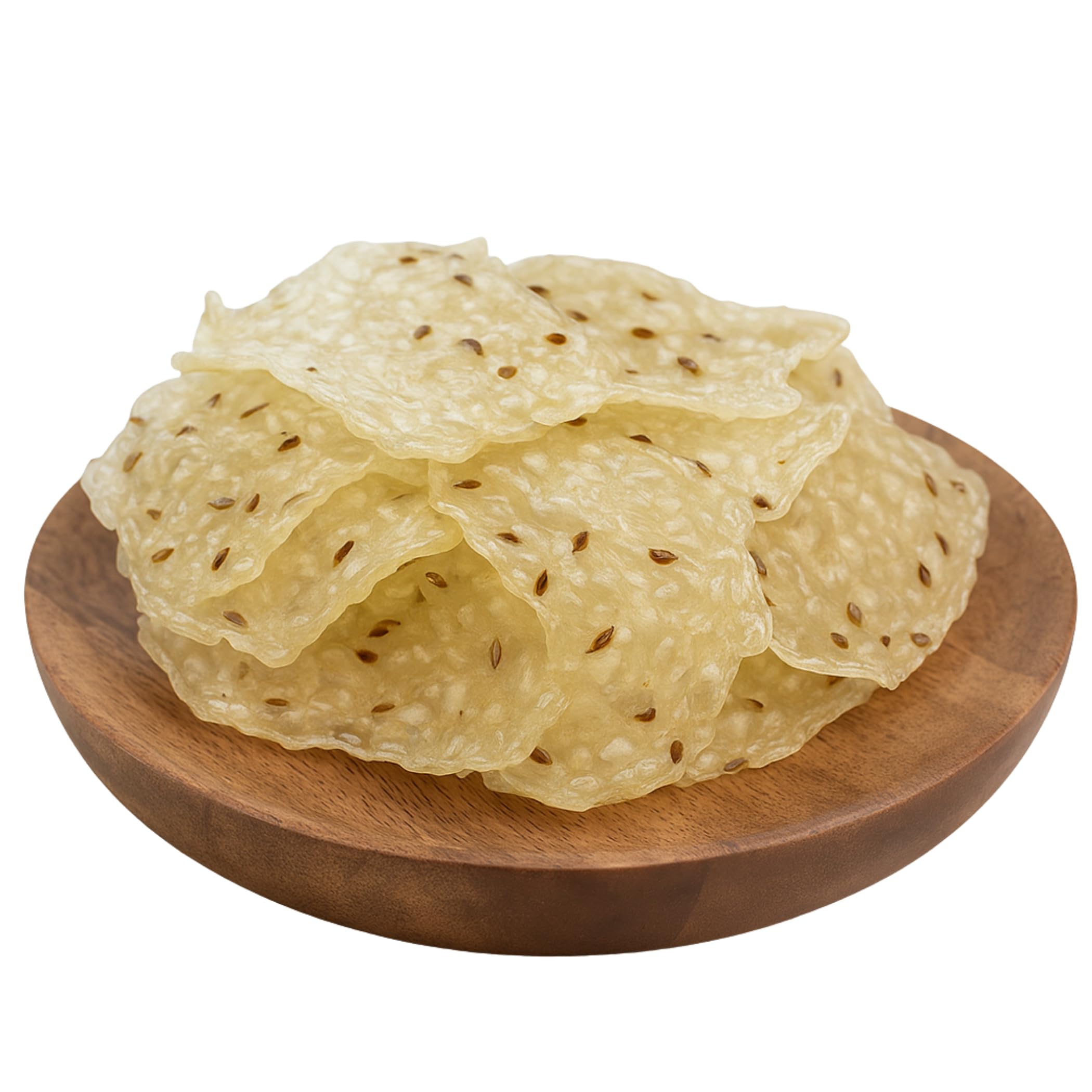
• MADRAS APPALAM TWIN PACK — BETTER VALUE, BETTER FRESHNESS MANAGEMENT | Pack of 2 x 200g (400g total) of Ganesh Madras Appalam. Each disc is made from urad dal flour with asafoetida following the authentic South Indian appalam recipe. Known regionally as appalam (Tamil Nadu), pappadam (Kerala), appadam (Karnataka), applam (Andhra Pradesh) and pappadum (diaspora). The twin-pack format means one 200g pack is always sealed and fresh while you consume from the open pack. No artificial colours, no preservatives, naturally gluten-free. Approximately 28 to 30 papads total across both packs.
• AUTHENTIC SOUTH INDIAN RECIPE — URAD DAL, ASAFOETIDA, SODIUM BICARBONATE | The recipe for Madras appalam has been essentially constant for centuries: urad dal flour for structure and protein, asafoetida for the distinctive warm flavour note, salt for seasoning, and sodium bicarbonate for the leavening that creates the puff. This 200g twin-pack uses exactly this recipe — no shortcuts, no artificial flavourings, no preservatives. The hing (asafoetida) used is the resin-based Iranian variety — significantly more complex in flavour than the diluted powder form commonly used by lower-quality manufacturers. Every ingredient on the label is exactly what it claims to be.
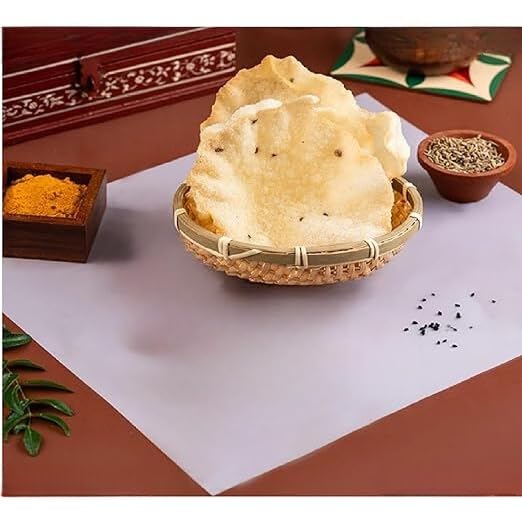
• COOK LIKE A SOUTH INDIAN HOUSEHOLD — ROASTING IS THE DAILY METHOD | Most South Indian households cook appalam by roasting on a gas flame rather than frying — it is faster, uses no oil, and produces a lighter result that is more appropriate as a meal accompaniment than as a standalone snack. Hold the disc over medium gas flame, rotate continuously for 8 to 10 seconds. The disc will blister and develop light brown spots — this is correct and expected. For frying: 175 to 190 degrees, 2 to 3 seconds. For microwaving with oil: 45 seconds on full power. Serve immediately with sambar, rasam, curd rice or biryani.
• THE PAPAD THAT GOES BY A DIFFERENT NAME IN EVERY SOUTH INDIAN STATE | The remarkable thing about South Indian appalam is that its regional name changes completely every few hundred kilometres while the product remains essentially identical. Tamil Nadu: appalam. Kerala: pappadam. Karnataka: appadam. Andhra Pradesh: applam or pappadum. This name variation is a mark of how deeply embedded this product is in South Indian food culture — each community has owned the product name so thoroughly that the regional variant has become the canonical name for that population.
• 2 x 200g TWIN PACK — APPROXIMATELY 28-30 PAPADS TOTAL — 6-MONTH SHELF LIFE | Better per-gram value than two separate 180g packs. Hygiene-sealed at Ganesh Industries in Bikaner. 6-month shelf life. Store in cool, dry location — appalam is very moisture-sensitive once opened. In humid climates (coastal cities, monsoon season), transfer opened packs to a sealed container. Ships with protective packaging. Gluten-free. No preservatives. 100% vegetarian.
Ganesh Vividh Madras Appalam — 200g x 2 Pack (400g Total) This listing contains two individually sealed packs of 200g each, totalling 400g of Ganesh Vividh Madras Appalam. Each pack contains approximately 14 to 15 papads. Total papads across both packs: approximately 28 to 30. Gluten-free. No preservatives. 5-month shelf life from date of manufacture. Ingredients Urad Dal Flour, Salt, Asafoetida (Hing), Sodium Bicarbonate, Edible Vegetable Oil. No preservatives. No artificial colours. No artificial flavours. Gluten-free. About the Twin-Pack Format The two-pack format keeps one pack sealed until the first is finished. Appalam is thin, light and moisture-sensitive once a pack is opened. Storing the second pack sealed maintains freshness until it is needed. Each 200g pack contains approximately 14 to 15 papads. About Vividh Madras Appalam Ganesh Industries uses the Vividh sub-brand for products distributed nationally across India. The asafoetida used in this product is Iran-sourced. How to Cook To fry: heat refined oil to 175 to 190 degrees Celsius. Lower one disc flat using ton